
 EN
EN
Designing a bathroom that works comfortably and safely for every member of the household requires more than choosing attractive fixtures. When children and elderly users share the same space, the mechanics of how water is delivered, controlled, and directed become critically important. Faucet ergonomics — meaning the way a fixture is shaped, positioned, and operated — can make a profound difference in daily usability, independence, and even safety. Understanding which ergonomic features genuinely matter helps homeowners and specifiers make informed decisions that serve people across all ages and physical abilities.
The bathroom is statistically one of the most hazard-prone rooms in any home, and much of that risk is tied directly to how fixtures are designed. An ergonomic handheld shower system, for instance, transforms a fixed, one-size-fits-all water source into a flexible, user-adjustable tool. But ergonomics extends well beyond the showerhead. Tap handles, lever angles, water temperature controls, hose flexibility, and fixture height all contribute to whether a bathroom genuinely accommodates its most vulnerable users — or silently excludes them.
Understanding Ergonomics in Bathroom Fixtures
What Ergonomics Means in a Faucet Context
Ergonomics is the science of designing tools and environments so that they fit the people using them, rather than requiring people to adapt to awkward or demanding designs. In the context of faucets and shower fixtures, ergonomics encompasses the physical effort required to turn or press controls, the positioning of the outlet relative to the user's body, and the sensory feedback that helps users understand what adjustments they are making. For children, whose hands are smaller and whose motor skills are still developing, and for elderly users, who may have reduced grip strength or limited joint mobility, these factors carry real weight.
Poor ergonomic design often goes unnoticed until a user struggles — a young child unable to turn a stiff rotary tap, or an older adult straining to reach a fixed showerhead at an uncomfortable angle. Good ergonomic design, by contrast, tends to feel effortless and intuitive. It removes friction from everyday tasks, reduces the chance of slipping or straining, and encourages independent use without requiring assistance. Recognizing these distinctions allows buyers to prioritize the right features when selecting fixtures for a multigenerational home.
Why Children and Elderly Users Have Shared and Distinct Needs
While children and elderly users are very different in their physical profiles, they share several ergonomic challenges. Both groups often have less grip strength than a healthy middle-aged adult, both benefit from simplified controls that do not require precise coordination, and both are more susceptible to scalding or cold shock if temperature management is poor. At the same time, their needs differ in important ways. Children are shorter and growing, which affects ideal fixture height and reach distance. Elderly users may have arthritic joints, reduced balance, or limited range of motion, which demands softer resistance in controls and more flexibility in how water is delivered.
An ergonomic handheld design addresses many of these overlapping needs because it places control directly in the user's hand rather than requiring them to position themselves under a fixed stream. This single design principle — bringing the water to the user rather than requiring the user to reach for the water — underlies much of what makes ergonomic bathroom design successful for these two groups. When specifying fixtures, keeping both profiles in mind ensures the bathroom remains functional and safe throughout the household's changing needs over time.
Key Ergonomic Features That Improve Usability
Lever Handles and Single-Lever Mixing Controls
Handle design is arguably the most immediately impactful ergonomic factor in faucet usability. Traditional round rotary knobs require a strong, precise grip and a sustained twisting motion — both of which can be genuinely difficult for small children and painful for elderly users with arthritis. Lever handles, by contrast, can be operated with an open palm, a wrist, or even a forearm, requiring minimal grip strength and far less precise coordination. For a child learning independence in the bathroom, this distinction can determine whether they succeed or give up.
Single-lever mixing taps that control both temperature and flow with one handle are particularly valuable in multigenerational households. They simplify decision-making by eliminating the need to balance two separate taps, and they allow users to pre-set a comfortable temperature position so that repeating the same setting becomes muscle memory. For elderly users managing cognitive fatigue or reduced concentration, this simplicity is not a minor convenience — it is a meaningful quality-of-life improvement that also reduces the risk of accidental scalding.
Thermostatic Controls and Temperature Limiting
Temperature safety is a critical ergonomic concern for both children and elderly users. Young children have thinner skin than adults, meaning they experience scalding at lower temperatures and more quickly. Older adults may have reduced sensitivity to temperature, making it harder to detect that water is dangerously hot before harm occurs. Thermostatic valves that pre-set the maximum outlet temperature to a safe range — typically no higher than 38 to 40 degrees Celsius — provide a structural safety buffer that does not depend on the user's reaction time or sensory acuity.
Beyond preventing burns, thermostatic controls also support ergonomic usability by reducing the mental load of managing temperature. When a user knows the water will be consistently safe and comfortable, they can focus on other aspects of their routine without anxiety. This is particularly relevant in shower environments, where an ergonomic handheld system paired with a thermostatic valve gives the user both the physical flexibility to direct water where needed and the confidence that temperature is already managed correctly before they begin.
Height Adjustability and Sliding Rail Systems
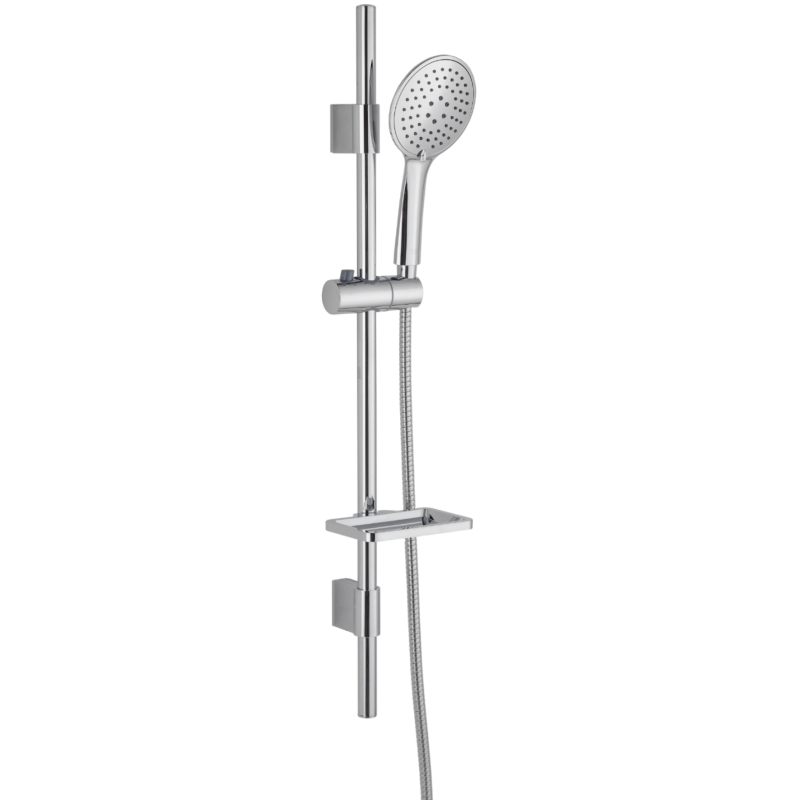
Fixed showerheads serve one height range comfortably and everyone else inadequately. A sliding rail system solves this by allowing the holder position to be moved up or down along a vertical rail, accommodating users from young children to tall adults within the same household and within the same shower session. This adjustability is not merely a convenience feature — for a child bathing independently or an elderly person with limited reach, having the showerhead at the right height is a fundamental safety consideration that affects balance, posture, and the ability to rinse without awkward movements.
An ergonomic handheld fixture mounted on a quality sliding rail gives users the option to either hold the head themselves or secure it at the optimal height for hands-free rinsing. This versatility is particularly significant for elderly users who may need one hand free for support, or for caregivers assisting someone with limited mobility. The ability to direct the water precisely where it is needed, without requiring the user to contort their body, reflects exactly the kind of user-centered thinking that effective ergonomic design embodies.
Grip, Weight, and Physical Demand Considerations
Lightweight Construction and Balanced Design
The physical weight and balance of a handheld shower unit directly affect how easily it can be held and maneuvered. A head that is too heavy at the front will fatigue the wrist quickly, particularly for elderly users who may already have reduced muscle endurance. Well-designed ergonomic handheld products distribute weight evenly, ensuring the grip feels natural and stable rather than requiring the user to compensate with muscular effort. This applies not only during sustained use but also when picking up or returning the head to its holder, where momentary inattention to weight and balance can cause drops or loss of control.
For children, a lighter unit also matters practically. A child who can comfortably hold and direct the showerhead themselves develops independence and confidence in the bathroom, which has long-term benefits for their hygiene habits and self-sufficiency. Fixtures that are clearly too heavy or cumbersome for a child to manage communicate exclusion rather than inclusion, and in households where the aim is universal usability, this is a design failure worth avoiding. Choosing a properly balanced ergonomic handheld product is a straightforward way to ensure the fixture works for the smallest and lightest-handed users as well as the strongest.
Hose Flexibility and Length
The hose connecting the showerhead to the water supply is a frequently overlooked ergonomic component. A hose that is too stiff limits the range of motion available to the user, reducing the benefit of having a handheld unit at all. A hose that is the right length — typically 1.5 to 2 metres for full flexibility — allows a seated user, a child, or someone lying in a bath to direct water across the full body without straining. Hose length and flexibility directly determine how much freedom of movement the ergonomic handheld design can actually deliver in practice.
For elderly users who may shower seated or who transfer between standing and sitting positions, a generous hose length is not a luxury but a functional necessity. It allows the fixture to serve the user in their actual position rather than requiring them to adopt a position that suits the fixture. This shift in design thinking — from a product that dictates use patterns to one that accommodates them — is at the core of meaningful ergonomic progress in bathroom fixtures. Specifiers should always consider hose quality, connector security, and anti-twist construction alongside the aesthetic and functional features of the showerhead itself.
Installation Considerations That Support Ergonomic Outcomes
Positioning Relative to the User's Range of Motion
Even the most ergonomically designed fixture will underperform if installed in a position that places it outside the comfortable reach zone of its users. For children, this often means lower installation heights for controls and hose connections, or the inclusion of a step stool in the design of the bathroom space. For elderly users, it means ensuring that controls are reachable without bending, stretching, or twisting — movements that carry fall risk in a wet environment. The ergonomic handheld design helps by extending reach, but the base installation must still reflect the needs of the people using the space.
Professional installers working on multigenerational homes or accessible bathrooms should conduct a user-centered height assessment before fixing rail positions or tap locations. This means considering the shortest and least mobile user, not the average or tallest. Adjustable rail systems, as discussed earlier, provide built-in flexibility that partially compensates for installation positioning, but getting the mounting height right from the outset reduces the need for users to make constant adjustments and simplifies the daily routine for everyone in the household.
Surface Texture and Visual Contrast Around Controls
Ergonomics in bathroom design extends to tactile and visual elements that help users locate and operate controls confidently. For elderly users with diminishing eyesight, strong visual contrast between controls and the surrounding wall or fixture body helps identify temperature indicators, flow settings, and the position of the handheld unit without confusion. Textured grip surfaces on the handle and body of the showerhead provide tactile feedback that reduces the chance of slipping, particularly when hands are wet or soapy.
Matte finish surfaces, such as those found on matte black fixtures, serve a dual ergonomic purpose. They reduce glare, which can be disorienting in a brightly lit bathroom, and they tend to offer slightly more grip than highly polished surfaces. When choosing a shower system for a household that includes children or elderly users, these seemingly cosmetic choices carry practical ergonomic weight. Every element of the fixture's interaction surface — from the hose coupling to the flow selector button — should be evaluated for its real-world usability by the people most likely to struggle with it.
FAQ
What makes a showerhead ergonomic for elderly users specifically?
For elderly users, an ergonomic showerhead should be lightweight, easy to grip with reduced hand strength, and attached to a long flexible hose that allows use from a seated or limited-mobility position. A sliding rail system that adjusts height without requiring tools or significant force is also an important ergonomic feature, as is a thermostatic valve that ensures temperature safety without requiring constant manual adjustment.
At what age can children typically use an ergonomic handheld shower independently?
Most children can begin to manage a lightweight ergonomic handheld shower unit with adult supervision from around four to five years of age, though this varies by individual. The key ergonomic factors that support independent use are low unit weight, a hose long enough to reach comfortably, easy-to-operate controls, and a temperature-limited supply that eliminates scalding risk. Installing the holder at a child-appropriate height on a sliding rail also makes independent use far more achievable.
Is a single-lever tap always better than separate hot and cold controls for accessibility?
For most accessibility-focused applications, yes — a single-lever tap simplifies operation significantly and requires less coordination than balancing two separate handles. The ability to set a preferred temperature position and return to it consistently benefits both children forming habits and elderly users who may find complex adjustments cognitively or physically demanding. When paired with a thermostatic limit setting, a single-lever design covers both usability and safety in one mechanism.
How does hose quality affect the ergonomic performance of a handheld shower system?
Hose quality affects ergonomic performance in several direct ways. A stiff or short hose restricts the range of motion the user can achieve, undermining the core benefit of a handheld design. A low-quality hose may kink under use or develop stiffness over time, making operation more difficult. An anti-twist hose construction prevents the unit from rotating against the user's wrist, which reduces fatigue and improves control. For ergonomic handheld products to perform as intended for children and elderly users, hose quality should be considered a primary specification factor alongside the showerhead itself.
Table of Contents
- Understanding Ergonomics in Bathroom Fixtures
- Key Ergonomic Features That Improve Usability
- Grip, Weight, and Physical Demand Considerations
- Installation Considerations That Support Ergonomic Outcomes
-
FAQ
- What makes a showerhead ergonomic for elderly users specifically?
- At what age can children typically use an ergonomic handheld shower independently?
- Is a single-lever tap always better than separate hot and cold controls for accessibility?
- How does hose quality affect the ergonomic performance of a handheld shower system?