 EN
EN
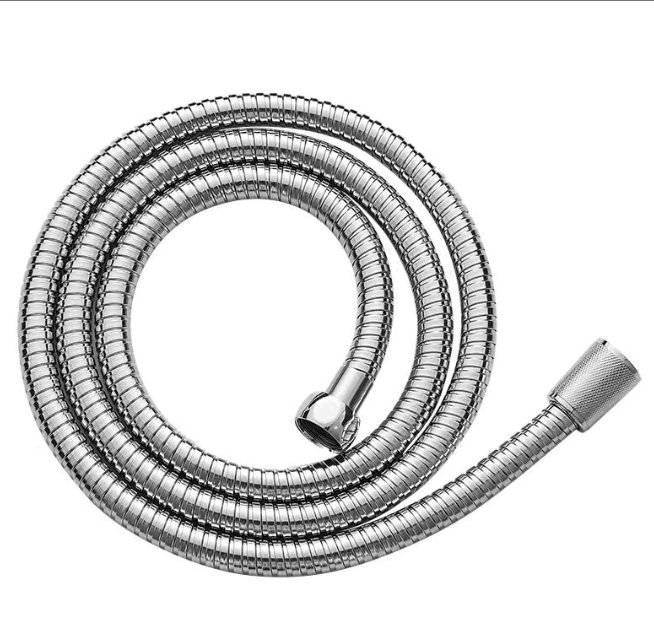
When water begins to drip from the joint between your shower hose and the faucet or handset, the culprit is almost always the shower hose connector. Many buyers focus on the hose body itself — its length, flexibility, or finish — yet the connector type is the true gatekeeper of a watertight, long-lasting installation. Understanding exactly how different connector designs control, reduce, or invite leaks is essential knowledge for specification engineers, procurement teams, bathroom fitters, and facility managers who need reliable performance year after year.
A shower hose connector is far more than a simple threaded cap. It is a precisely engineered assembly of metal, sealing material, and geometric form that must maintain a pressure-tight bond under constant thermal cycling, water chemistry variation, and mechanical stress from daily use. When the connector type is mismatched to the application or is manufactured to a lower standard, leaks are not a matter of 'if' but 'when.' This article breaks down the core connector types, the physical principles behind leak prevention, and the specification decisions that separate a durable installation from a chronic maintenance problem.
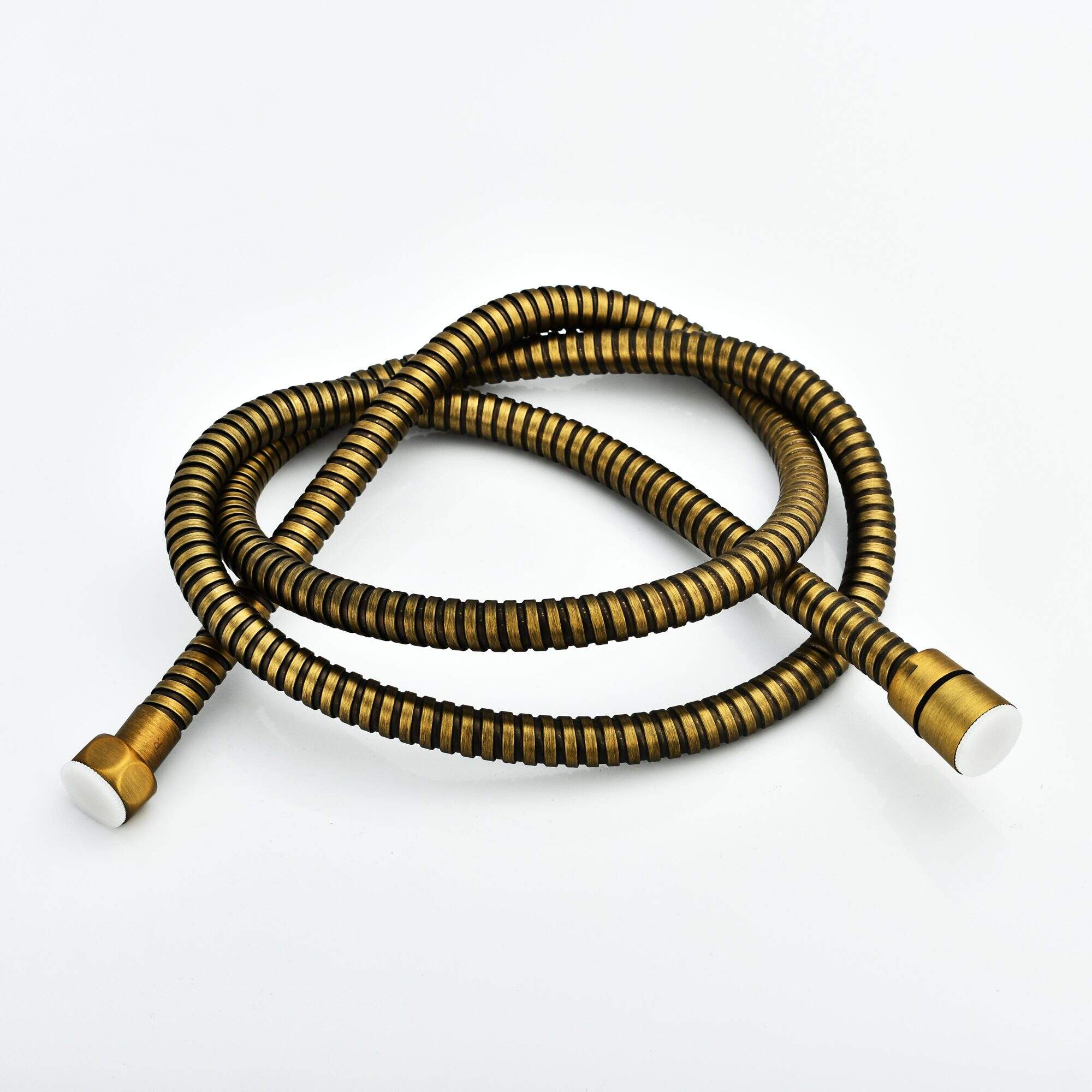
The Physical Principles Behind Connector Leaks
How Pressure and Seal Geometry Interact
Every shower hose connector creates a seal by pressing two surfaces together under controlled clamping force. The geometry of that contact zone determines how effectively the connector resists water pressure. A flat-face seal relies on broad surface contact, distributing force evenly across a washer or O-ring. A tapered or conical seat concentrates force along a narrow band, which can achieve very high specific pressure and an exceptionally robust seal with minimal tightening torque.
When the geometry is correct and tolerances are tight, even moderate hand-tightening produces a leak-free joint. When geometry is imprecise — for example, when a flat-faced nut mates with a slightly convex seat — the sealing surfaces make contact only at the edges, creating stress concentrations that cause the washer to extrude, crack, or compress unevenly over time. This is why connector design quality is a more reliable predictor of long-term leak prevention than tightening torque alone.
Thermal Cycling and Material Fatigue
Hot water repeatedly expands metal and sealing materials, and cold ambient conditions contract them. Over hundreds of shower cycles, this constant movement introduces micro-fatigue into both the seal and the connector body. A shower hose connector made from low-quality alloy may develop hairline cracks near the thread root or at the nut flange, providing a path for water to migrate even when the seal itself is intact.
Brass connectors, particularly those made from dezincification-resistant brass, handle this thermal cycling far better than zinc-alloy or chrome-plated plastic alternatives. Brass maintains dimensional stability across temperature ranges typical of domestic hot water systems, which means the clamping geometry remains consistent cycle after cycle. The result is that the sealing washer or O-ring continues to operate within its designed compression range rather than gradually losing grip as the surrounding metal shifts.
Common Shower Hose Connector Types and Their Leak Profiles
Flat-Seat Nut Connectors with Rubber Washers
The flat-seat nut connector is the most widely used shower hose connector format globally. It consists of a metal nut — typically brass or chrome-plated brass — that clamps a flat rubber washer against a flat or near-flat mating surface on the tap outlet or handset inlet. When the rubber washer is of adequate thickness, correct Shore hardness, and made from EPDM or similarly water-resistant material, this design performs reliably for years.
The primary vulnerability of flat-seat connectors is washer degradation. Rubber in permanent contact with hot chlorinated water softens, flattens, and eventually cracks. A quality shower hose connector designed for professional use incorporates a washer recess that prevents the rubber from extruding sideways under pressure, prolonging service life significantly. Budget connectors omit this feature, allowing washer extrusion and early seal failure.
Thread quality is the second critical variable. Coarse, inconsistently pitched threads generate uneven axial force as the nut is tightened, creating a rocking motion that distorts the washer rather than compressing it uniformly. Precision-machined threads — the kind found on professional-grade brass connectors — distribute force evenly, which is essential for flat-seat leak prevention.
Swivel Nut Connectors and Anti-Twist Mechanisms
A swivel nut shower hose connector allows the nut to rotate independently of the hose body during installation and use. This design solves a significant leak-generation problem: when a standard fixed-nut connector is installed on a hose under torsional tension — because the hose spiraled during assembly — the residual twist stress is continuously transmitted to the seal joint. Over time, that stress causes the washer to shift off-center, producing a partial seal that weeps under pressure.
Anti-twist shower hose systems address this at the connector level by incorporating a free-rotating nut with an internal bearing ring or low-friction washer seat. The hose body is mechanically decoupled from the sealing nut, so any rotational stress in the hose body dissipates without transmitting torque to the seal interface. This is particularly valuable in installations where the hose must navigate corners or where users frequently pull the handset in different directions.
From a leak-prevention standpoint, the swivel mechanism must be engineered with a secondary internal seal — typically an O-ring — to prevent water from tracking backward through the swivel gap. A shower hose connector without this secondary seal on the swivel joint will leak at the swivel point under dynamic use, even if the primary washer seat remains sound.
Threaded Metal Nut Connectors with O-Ring Seals
Some professional and commercial-grade shower hose assemblies use O-ring face seals instead of flat rubber washers. The O-ring sits in a precision-machined groove within the connector nut and is compressed radially or axially against a polished mating surface when the nut is tightened. This design tolerates slight surface imperfections better than a flat washer because the O-ring's circular cross-section can conform to minor irregularities.
A shower hose connector with an O-ring seal also benefits from self-energizing behavior under pressure: as system water pressure rises, it presses the O-ring harder against the groove walls and the mating face, actively improving the seal rather than simply relying on the static clamping force from assembly. This makes O-ring connectors particularly well-suited to installations with variable or elevated water pressure.
The Role of Nut Material and Finish in Long-Term Leak Prevention
Brass Nuts Versus Inferior Alloy Alternatives
The material of the shower hose connector nut directly governs corrosion resistance, dimensional stability, and thread durability — all of which contribute to sustained leak prevention. Brass, particularly when produced from dezincification-resistant alloys and given a durable surface finish, resists the pitting corrosion that creates leak paths over time. Corrosion around the thread area or at the nut-to-hose swage joint introduces micro-channels through which water can bypass the primary seal.
Zinc-alloy nuts, which are visually indistinguishable from brass when freshly chrome-plated, degrade significantly faster in hot water environments. The zinc matrix absorbs water through microscopic porosity, swells, and distorts, changing the thread geometry and reducing the clamping force available at the seal face. A shower hose connector specified for commercial or long-term residential use should always use solid brass nuts with confirmed alloy composition rather than chrome-plated zinc alternatives.
Surface Finish and its Impact on Seal Interface Quality
The surface finish of the nut's seating face is as important as its material. A rough or tooling-marked seating face creates a micro-topography that prevents the washer or O-ring from achieving uniform contact. Water under pressure will find and exploit these microscopic gaps, creating a slow weep that worsens as the leak path is enlarged by erosion over time.
Precision-machined and polished seating faces on a quality shower hose connector ensure that the sealing element contacts a smooth, consistent plane. This not only improves initial sealing performance but also means that the seal can be disassembled and reassembled multiple times — for maintenance or filter inspection — without damage to the seating geometry. Budget connectors that are machined to lower surface finish tolerances rarely survive more than two or three reassembly cycles before the seat is too scratched to seal reliably.
Installation Practices That Protect Connector Seal Integrity
Correct Tightening Torque and Thread Engagement
Even the highest-quality shower hose connector will leak if installed incorrectly. Over-tightening is as damaging as under-tightening: excessive torque extrudes rubber washers beyond their elastic limit, crushes O-rings out of their grooves, and can crack brass nuts or strip threads. The goal is to achieve the designed seating load — typically achievable with firm hand-tightening plus no more than a quarter-turn with a wrench for metal-to-metal seat connections.
Thread engagement depth also matters significantly. A shower hose connector nut that only engages two or three thread turns provides insufficient clamping stability, allowing the joint to rock under lateral loading and reduce the effective sealing pressure at the washer face. Full thread engagement — typically six to eight turns for standard 1/2-inch BSP connections — distributes the axial force over a larger thread contact area, improving joint rigidity and seal performance.
Compatibility Between Connector Type and Tap Outlet Geometry
A flat-seat shower hose connector paired with a tap that has a domed or recessed outlet seat will not produce a reliable seal regardless of tightening force, because the washer cannot conform to the mismatched geometry. Before specifying a connector type, the geometry of the mating fitting must be confirmed. In practice, this means maintaining a small inventory of washer profiles — flat, domed, and tapered — to match the range of tap outlet styles encountered in the field.
Compatibility also extends to thread form and pitch. Mixing BSP and metric thread standards — a common error in renovation projects where imported fittings are combined with legacy domestic pipework — produces a cross-threaded joint that appears tight but contains spiral leak paths along the thread flanks. A reliable shower hose connector specification always begins with confirming the thread standard of both mating parts before assembly.
FAQ
What is the most leak-prone part of a shower hose connector?
The sealing washer or O-ring at the flat-seat interface is statistically the most common source of leaks in a shower hose connector assembly. These elements degrade through thermal cycling, chemical exposure, and compression fatigue. Specifying connectors with washer recesses that prevent extrusion, and using EPDM or silicone rather than standard rubber, significantly extends the service life of this critical component.
Does connector material really affect leak prevention, or is it mainly about the washer?
Both matter, and they interact. A premium EPDM washer installed in a corroded or dimensionally unstable zinc-alloy shower hose connector nut will still leak, because corrosion changes the seating geometry and reduces the uniformity of clamping force. Brass nuts with stable dimensions and corrosion-resistant surfaces preserve the conditions the washer needs to maintain a consistent seal over years of use.
Can an anti-twist shower hose connector reduce leaks compared to standard connectors?
Yes, particularly in high-use or multi-user environments. A shower hose connector with an anti-twist design mechanically decouples rotational stress in the hose body from the seal interface, preventing the washer displacement that causes slow weeping leaks. However, the anti-twist mechanism must include a secondary O-ring seal at the swivel point to prevent water from tracking through the rotation gap.
How often should shower hose connectors be inspected for potential leak risk?
In commercial or high-use settings, a visual inspection of each shower hose connector every six to twelve months is a reasonable maintenance interval. Look for mineral scale buildup at the nut face — a reliable indicator that micro-seepage is occurring — as well as any visible corrosion on the nut body or discoloration of the washer seat. Proactive washer replacement at the first sign of weeping prevents water damage to walls, floors, and substrate materials. For a professional-grade option combining brass nuts, anti-twist design, and precision sealing geometry, consider the shower hose connector designed for no-leak performance in demanding bathroom environments.
Table of Contents
- The Physical Principles Behind Connector Leaks
- Common Shower Hose Connector Types and Their Leak Profiles
- The Role of Nut Material and Finish in Long-Term Leak Prevention
- Installation Practices That Protect Connector Seal Integrity
-
FAQ
- What is the most leak-prone part of a shower hose connector?
- Does connector material really affect leak prevention, or is it mainly about the washer?
- Can an anti-twist shower hose connector reduce leaks compared to standard connectors?
- How often should shower hose connectors be inspected for potential leak risk?