
 EN
EN
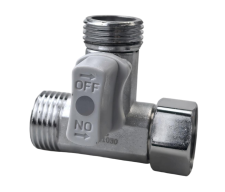
When planning a plumbing installation or selecting hardware for a bathroom or kitchen project, understanding the sizing and threading standards that apply to angle valves is essential for achieving leak-free, code-compliant connections. Angle valves are quarter-turn shut-off fittings installed where supply lines change direction — typically beneath sinks, toilets, and basins — and their dimensional specifications directly determine compatibility with pipes, hoses, and fixtures throughout the system. Getting these specifications right from the start prevents costly rework and ensures long-term reliability.
The market for angle valves spans residential, commercial, and light industrial applications, and the available size and threading options reflect that breadth. From the inlet connection that joins the wall supply stub-out to the outlet connection that accepts a flexible hose or rigid tube, every dimension follows a recognized standard. This article explains what those standards are, how they are measured, and why matching them correctly is a non-negotiable step in any plumbing or bathroom fitout project.
Why Size and Threading Standards Matter for Angle Valves
Dimensional Compatibility Across the Supply Chain
Angle valves sit at the junction between a fixed pipe system and a movable or replaceable fixture connection. Because they are made by numerous manufacturers across different regions, a shared set of dimensional standards is what makes interchangeability possible. Without standardized sizes and thread forms, a valve body produced in one country might be physically incompatible with supply lines sold in another, even when both are nominally described as the 'same size.'
Standardization also simplifies maintenance. When a homeowner or facility manager needs to replace a worn angle valve, a correctly sized replacement can be sourced from virtually any plumbing supplier without custom machining or adapters. This ease of replacement depends entirely on conformance to recognized size and thread standards, which is why specifiers, contractors, and procurement teams need to understand exactly which standards govern the angle valves they select.
In practice, the most widely encountered inlet sizes for angle valves are 1/2 inch and 3/8 inch nominal, with 3/4 inch appearing in higher-flow commercial applications. The outlet size, which connects to the supply hose leading to the fixture, is most commonly 3/8 inch OD compression or 1/2 inch where larger flow is needed. These measurements, however, only make full sense once the underlying thread form is understood.
Consequences of Mismatched Threading
Threading mismatch is one of the most common causes of installation failure with angle valves. Two threads can look nearly identical to the naked eye yet differ in pitch — the number of threads per inch — or in thread form, which describes the cross-sectional profile of each thread. Forcing mismatched threads together can produce a joint that initially holds but slowly weeps water or fails suddenly under pressure.
The most important distinction in the context of angle valves is between tapered and parallel thread forms. Tapered threads, such as NPT in North America, rely on the wedging action of the taper to create a seal, typically assisted by thread sealant tape. Parallel threads, common in BSP and metric systems, use a sealing face or washer at the thread end rather than the thread itself for pressure integrity. Mixing a tapered male thread with a parallel female thread, or vice versa, produces a joint that cannot seal reliably regardless of how much sealant is applied.
Understanding these fundamentals before purchasing angle valves eliminates guesswork on the job site and avoids the delays and expenses that come from discovering incompatibility after installation has begun.
Standard Inlet Sizes for Angle Valves
The 1/2 Inch Nominal Standard
The most prevalent inlet size for residential and light commercial angle valves is 1/2 inch nominal. This refers to the nominal pipe size designation rather than an exact measured dimension, which is a point of frequent confusion. In NPT and BSP systems, the actual thread dimensions of a 1/2 inch fitting are larger than 1/2 inch because the nominal size historically approximated the bore of the pipe, not its outer diameter or thread diameter.
A 1/2 inch nominal angle valve inlet is typically used where the supply stub-out from the wall or floor carries standard residential water supply pressure and flow. This size is suitable for toilets, bathroom basins, kitchen sinks, and bidets. The 1/2 inch nominal designation applies across both NPT and BSP thread systems, though the actual thread dimensions differ slightly between the two, which is why it is not sufficient to specify size alone — the thread standard must also be confirmed.
In metric plumbing markets, the equivalent is often described as DN15, which corresponds to a 15mm nominal bore. Angle valves sold in Europe and parts of Asia may carry DN15 markings rather than fractional inch designations, but they frequently connect using G1/2 BSP threads, making cross-reference between the metric size designation and the thread designation important when sourcing components internationally.
The 3/8 Inch and 3/4 Inch Variants
The 3/8 inch nominal inlet size is common in angle valves designed for lower-flow applications, particularly toilet fill valves and some basin installations where the supply line transitions from a 1/2 inch pipe to a smaller flexible hose. These angle valves often feature a 3/8 inch inlet and a 3/8 inch OD compression outlet, making them a compact solution for tight cabinet spaces beneath basins.
The 3/4 inch nominal size appears in commercial and high-flow applications where larger volumes of water are needed, such as commercial kitchen equipment, utility connections, or multi-outlet manifolds. Angle valves at this size are physically larger and heavier, and the torque required to operate them under full line pressure is greater. Specifiers working on commercial projects should confirm whether 3/4 inch angle valves are required by the fixture manufacturer's installation guidelines rather than defaulting to the more common residential sizes.
Some angle valves are available with a 1/2 inch inlet and a 3/8 inch outlet, which serves as a reducing configuration. This is particularly useful when an existing 1/2 inch supply stub-out needs to connect to a modern fixture with a 3/8 inch compression inlet hose. Such reducing angle valves are widely stocked and represent one of the most practical size combinations in residential bathroom work.
Thread Standards That Govern Angle Valves
NPT: The North American Tapered Thread Standard
NPT stands for National Pipe Taper, and it is the dominant thread standard for angle valves used in North American plumbing applications. NPT threads have a taper of 1 in 16, meaning the thread diameter changes by 1 unit for every 16 units of thread length. This taper causes the male and female threads to bind against each other as the fitting is tightened, creating a mechanical interference that — when combined with thread sealant tape or pipe dope — forms a pressure-tight joint.
For 1/2 inch NPT angle valves, the thread count is 14 threads per inch (TPI). For 3/8 inch NPT, it is also 18 TPI. These thread counts are defined in ASME B1.20.1, which is the governing standard for NPT dimensions in the United States. Contractors working in North America can generally assume that angle valves from plumbing supply channels conform to this standard, but imported products sold outside traditional distribution channels may not, making thread verification important when sourcing from unfamiliar suppliers.
NPSM is a related parallel thread standard sometimes encountered on angle valves where a washer-sealed connection is preferred over a tapered seal. NPSM threads will not seal reliably if assembled as if they were NPT, so identifying which form a given valve uses requires checking the product specification sheet rather than relying on visual inspection alone.
BSP: The British Standard Pipe Thread Family
BSP, or British Standard Pipe, is the thread system used across the United Kingdom, Australia, most of Europe, and large parts of Asia. It divides into two main forms: BSPT, which is tapered and functions similarly to NPT in relying on thread interference for sealing, and BSPP (also written as G), which is parallel and relies on a bonded seal, O-ring, or washer at the thread face.
Angle valves sold in BSP markets most commonly use G1/2 (BSPP 1/2 inch) or G3/8 (BSPP 3/8 inch) thread forms. The thread pitch for G1/2 is 14 TPI, identical to NPT 1/2 inch, which is why the two are sometimes confused. However, BSP threads use a Whitworth thread form — a 55-degree included angle — while NPT uses a 60-degree included angle. This difference in thread form means that BSP and NPT fittings are not interchangeable even when the thread pitch happens to match.
For international projects or imported bathroom hardware, confirming whether angle valves are specified in BSP or NPT is critical. A project using imported shower systems or bathroom fixtures from European or Asian manufacturers will almost certainly require BSP-threaded angle valves, while North American-sourced plumbing infrastructure calls for NPT. Mixing the two without appropriate adapter fittings is a reliable path to installation problems.
Metric Threads and DIN Standards
In some European and Asian markets, angle valves are manufactured to metric thread standards rather than the inch-based BSP or NPT systems. Metric threads for plumbing fittings typically follow ISO 228 for parallel threads or ISO 7 for tapered threads, and they are designated using the letter 'M' followed by the nominal diameter in millimeters and the pitch in millimeters per thread — for example, M10x1 for a 10mm diameter thread with a 1mm pitch.
DIN standards, developed in Germany, have historically governed many metric plumbing components across continental Europe, and angle valves designed for German or Central European markets may carry DIN designations alongside or instead of ISO markings. While DIN and ISO metric thread dimensions are generally harmonized, the valve body dimensions, seat geometry, and seal type may differ from equivalent BSP or NPT products, so substitution requires careful specification checking.
Angle valves with metric thread inlets are less common in English-speaking markets but appear regularly in high-end bathroom hardware sourced from European manufacturers. When integrating such valves into a project built around inch-based supply infrastructure, metric-to-BSP or metric-to-NPT adapters are required, and these adapters must themselves be rated for the operating pressure of the supply system.
Outlet Connections and Compression Fitting Standards
Compression Outlet Sizing
The outlet side of most residential angle valves uses a compression fitting rather than a threaded joint. Compression fittings rely on a ferrule — a small ring that deforms slightly when the compression nut is tightened — to create a seal around the outer diameter of the supply tube. This design allows the flexible hose or rigid tube connected to the angle valve to be removed and reinstalled without damage to the valve body itself, which is a significant practical advantage in maintenance and fixture replacement scenarios.
The most common compression outlet size for angle valves in residential applications is 3/8 inch OD, which accepts a supply hose with a 3/8 inch outer diameter. The 1/2 inch OD compression outlet is the next most common, appearing on valves intended for higher-flow fixtures or where the design calls for a larger hose diameter. These OD measurements refer to the actual outer diameter of the tube being connected, not to a nominal pipe size, which makes them more straightforward to verify than thread-based nominal sizes.
When specifying angle valves for a bathroom fitout, matching the outlet compression size to the supply hose diameter is as important as matching the inlet thread standard to the supply pipe. A angle valves installation that connects properly at the wall stub-out but uses a mismatched compression fitting at the outlet will leak under operating pressure.
Push-Fit and Flexible Hose Connections
Beyond traditional compression fittings, modern angle valves increasingly incorporate push-fit outlet connections that accept standard flexible supply hoses directly. These are particularly common in bathroom renovation contexts where the angle valve is designed to accept a braided stainless steel hose with a pre-fitted nut. The outlet in this case is not a compression fitting in the traditional sense but rather a machined port sized to accept the hose's nut, which is typically a 1/2 inch BSP or 3/8 inch flat-seat fitting depending on the market and product specification.
Flexible hose outlets on angle valves must be compatible with the hose end fittings in terms of both thread standard and seat geometry. A flat-seat hose nut requires a flat-seat valve outlet port; a conical-seat hose nut requires a conical-seat port. Using a flat-seat hose on a conical outlet, or vice versa, will produce a joint that cannot seal correctly regardless of tightening force, and the resulting leak may be gradual enough to cause concealed water damage before it is noticed.
Specifiers and installers working with complete bathroom hardware sets — including shower systems, basin mixers, and their associated supply connections — should verify that the angle valves specified for those fixtures are compatible with the hose end fittings supplied as part of the hardware set. This is especially relevant for imported European or Asian bathroom products, where hose end standards may differ from locally available angle valves.
Selecting the Right Angle Valve for Your Application
Residential Bathroom and Kitchen Applications
For standard residential bathroom and kitchen installations in North American markets, the most commonly specified configuration is a 1/2 inch NPT inlet with a 3/8 inch OD compression outlet. This configuration suits toilet fill valve connections, basin taps, kitchen sink mixers, and most under-counter appliance connections. Stainless steel or brass body angle valves in this configuration are widely available, with stainless steel offering superior corrosion resistance in environments subject to humidity and condensation.
In BSP markets such as Australia and the United Kingdom, the equivalent standard configuration uses a G1/2 inlet thread and a 3/8 inch or 15mm OD compression outlet. Australian plumbing regulations, for example, require that angle valves used in water supply applications carry a WELS (Water Efficiency Labelling and Standards) rating and conform to AS/NZS standards for thread form and pressure rating. Importing angle valves for use in regulated markets requires confirming compliance with the applicable local standard, not just dimensional compatibility.
Pressure rating is another selection criterion that works alongside size and threading. Most residential angle valves are rated for working pressures between 10 bar and 25 bar, with 10 bar being sufficient for standard municipal supply pressure. High-rise buildings, pressure-boosted systems, or commercial hot water applications may require valves with higher pressure ratings, and the specified pressure class should be confirmed against the system operating pressure before procurement.
Commercial and Industrial Considerations
Commercial applications for angle valves extend beyond simple under-sink shut-offs to include equipment isolation, manifold inlets, and chemical dosing systems. In these contexts, the size range widens to include 3/4 inch and 1 inch nominal fittings, and the thread standard becomes especially important because commercial piping systems are often built to strict specification standards that require full conformance to NPT, BSP, or metric DIN standards without approximation.
Material selection also intersects with sizing in commercial angle valves. Stainless steel bodies — typically 304 or 316 grade — offer corrosion resistance that brass cannot match in aggressive environments, and stainless steel angle valves are available in the same standard sizes and thread forms as their brass equivalents, making material upgrades straightforward when the dimensional specification is already established.
For industrial systems, angle valves may carry additional certifications such as NSF 61 for potable water contact, or specific pressure-temperature ratings required by mechanical engineering specifications. In these cases, the size and thread standard is just one element of a broader compliance requirement, and procurement should be guided by the full valve specification sheet rather than by dimensional data alone.
FAQ
What is the most common inlet thread size for residential angle valves?
The most common inlet thread size for residential angle valves is 1/2 inch nominal, which in North American markets corresponds to 1/2 inch NPT (National Pipe Taper), and in BSP markets corresponds to G1/2 parallel thread. This size is suitable for toilet, basin, and kitchen sink connections at standard residential supply pressures. The 3/8 inch nominal inlet is also encountered in lower-flow applications, particularly on valves that connect a 1/2 inch supply to a 3/8 inch outlet hose.
Are BSP and NPT threads interchangeable on angle valves?
No, BSP and NPT threads are not interchangeable, even when the nominal size designation appears the same. Both systems use 14 threads per inch for the 1/2 inch nominal size, but BSP uses a 55-degree Whitworth thread form while NPT uses a 60-degree thread form. This difference in thread geometry means that the threads will partially engage but cannot form a reliable pressure-tight seal. Using adapters specifically rated for BSP-to-NPT conversion is the correct approach when connecting components from the two different systems.
What does 'compression outlet' mean on an angle valve specification?
A compression outlet means the valve's outlet port uses a compression fitting to connect to the supply hose or tube. A ferrule ring is compressed around the outer diameter of the hose when the compression nut is tightened, forming a seal without requiring thread sealant. The outlet size, typically described as 3/8 inch OD or 1/2 inch OD, refers to the outer diameter of the hose or tube that the compression fitting accepts. Compression outlets allow the supply hose to be disconnected and reconnected without damaging the valve body, which simplifies fixture replacement.
How do I verify which thread standard applies to an imported angle valve?
The most reliable method is to check the product specification sheet or technical data sheet supplied by the manufacturer, which should state the thread standard by name — such as NPT, BSPP, BSPT, or ISO metric — along with the nominal size. Physical verification can be done using a thread gauge, which measures both thread pitch and included angle. If only the pitch matches but the thread form does not, the threads are from different standards and should not be joined without an appropriate adapter. For critical installations, having a qualified plumber verify thread compatibility before assembly is the safest approach.